
Alani Nu in the Clinic: Performance Booster or Just Pretty Packaging?
Hi all! We are taking a break from our Costa Rican Nutrition Series to bring you this fun research update -- enjoy it over some coffee or a Alani nu!
If you treat active patients, from college athletes to weekend warriors, you’ve probably seen the brightly colored cans of Alani Nu in your clinic's waiting room. Known for its aesthetic branding and sweet flavors, this energy drink has exploded in popularity.
The Formula: What's Actually Inside?
-
200 mg of Caffeine: Roughly equivalent to two cups of coffe.
-
Taurine: An amino acid commonl...
Arizona PT License Renewal: 20 CEU Requirements and More

This guide details the crucial steps and requirements for successfully completing your Arizona PT License Renewal with the Arizona State Board of Physical Therapy. Understanding these rules is key for every licensed physical therapist (PT) and physical therapist assistant (PTA) to maintain active status.
The Arizona PT License Renewal Cycle and Key Details
Arizona utilizes a biennial renewal cycle, meaning licenses expire every two years on August 31 of even-numbered years.
- License Term: Biennial (Two-Year Period).
- Expiration Date: All licenses expire on August 31 of every even-numbered year. Example August 31, 2028
- Renewal Fee (Active PT): $160.
- Official Link: https://ptboard.az.gov
Arizona PT/PTA CEU Requirements: Continuing Competence
Licensees must complete specific continuing education hours (CEUs), referred to as Continuing Competence activities, to qualify for Arizona PT License Renewal.
- Physical Therapists (PT): 20 contact hours required. At least 10 hours must b ...
The Blue Zone Bone Secret (filmed in Costa Rica 🇨🇷)
Mechanical loading builds bone, but metabolic bioavailability dictates whether the skeletal matrix actually forms. While filming in Costa Rica’s Nicoya Peninsula, the biological driver behind the local centenarians' exceptionally low hip fracture rates became glaringly clear: deep-aquifer hard water.
Key Clinical Insights for Physical Therapists
-
Magnesi...
Why Japan Proves Consistent Movement (NEAT) Beats the Gym
The 10,000-Step Fallacy
For years, the "10,000 steps per day" mantra has been the universal benchmark for health. And for years, most Westerners have compartmentalized that movement into a grueling hour at the gym, only to return to a completely sedentary lifestyle for the remaining 23 hours.
As a Physical Therapist focused on both structural mechanics and metabolic nutrition, I see the result daily: stiff hips, chronic inflammation, and slow injury recovery. The logic that an isolated fitness block can counteract a lifestyle defined by chronic vasoconstriction and stiffness is fundamentally flawed.
During my recent trip to Tokyo, navigating the complex transit and crowded crossings like Shibuya, I witnessed the alternative—and it is the native regulator of joint longevity.
The NEAT Solution: Walking as Life, Not Exercise
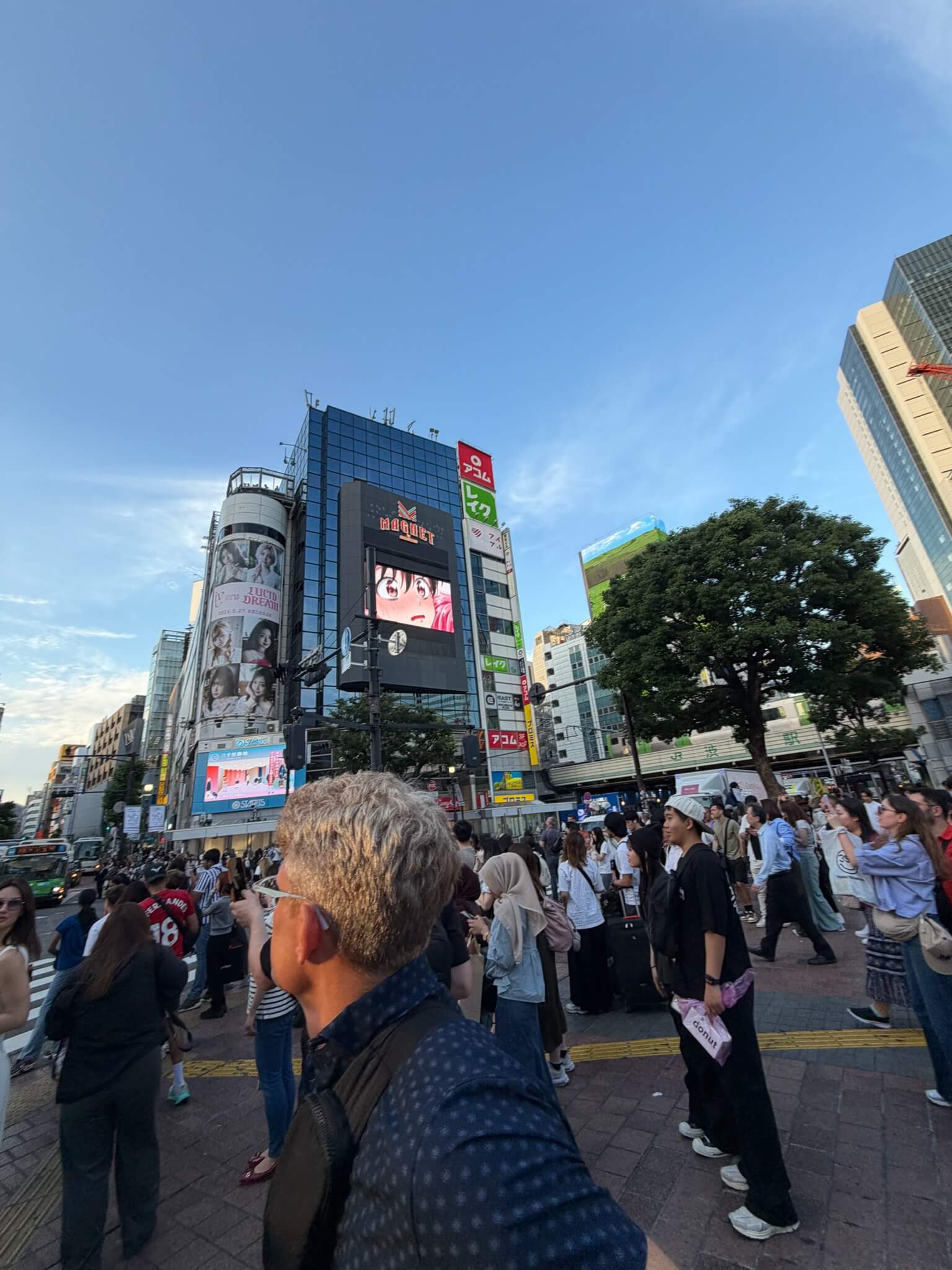 In Japan, the average person clears an impressive step count not because they are running on treadmills, but purely because of Non-Exercise Activity Thermogenesi...
The Japan Longevity Series: Why Japanese Yakitori Beats the American Mega-Steak for Joint Health and Muscle Recovery
Introduction: A Tale of Two Proteins
If you ask the average American what "fueling muscle" looks like, they will likely describe a massive 16-to-24-ounce steak, perhaps a bone-in ribeye, loaded with fat and flavor. We have been conditioned to believe that when it comes to protein consumption for muscle retention and structural repair, "more is better."
However, during my recent trip to Tokyo, specifically while navigating the iconic, smoky alleys of Omoide Yokocho (known as "Memory Lane"), I was struck by a powerful dietary contrast.
Here, surrounded by the glow of lanterns and the scent of charcoal, the concept of "eating meat" is radically different. And as a Physical Therapist focused on longevity, I believe it’s a lesson the West desperately needs to learn.
Today, we’re contrasting the American Mega-Steak with Japanese Yakitori.
The Protein Paradox: US vs. Japan by the Numbers
It is no secret that red meat consumption in the United States is among the highest globally. Accor...
The Akihabara Posture Hack: Why Japanese Ergonomics & Movement Beat Lower Back Pain
At Nutritional Physical Therapy, we talk a lot about the power of an anti-inflammatory diet. We analyze how cutting excess sugar stops collagen from becoming brittle, how hydration keeps intervertebral discs plump, and how bioavailable protein fuels tissue repair.
But here is the clinical truth that every clinician and patient needs to remember: Nutrition provides the building blocks, but movement and biomechanics are key.
You can eat the cleanest, most anti-inflammatory diet on earth, but if you sit slouched in a rigid office chair for eight hours a day, mechanical shear force will win every single time.
During our recent trip for The Japan Longevity Series, we explored Akihabara—Tokyo’s high-tech electronics district. Among the robotics and neon lights, we uncovered an exceptional example of proactive Japanese ergonomic design: the MTG "Style" posture-support cushion.
Here is what this Japanese posture tech teaches us about pelvic stabilization, spine biomechanics, and why your s...
Matcha vs. The Cortisol Crash: Are You Drinking a Green Sugar Bomb?
Welcome back to the #JapanLongevitySeries. Having recently returned from three weeks traveling through Tokyo, Osaka, and Hokkaido, the stark contrast between authentic Japanese nutritional practices and our Americanized versions has been front of mind—especially regarding how we fuel our nervous systems and approach tissue recovery.
Matcha is everywhere in the US right now, but are you actually getting the cellular benefits of this 800-year-old ritual, or are you just drinking a green sugar bomb?
The History vs. The Hype
-
The History: Authentic matcha has been consumed by Japanese monks and samurai for over 800 years, dating back to the 12th century. It was historically utilized to achieve a state of sustained, calm focus.
-
The US Boom: The US matcha market is currently growing at a massive 10%+ CAGR. This explosion was heavily accelerated when commercial giants like Starbucks introduced "green tea lattes" to the American mainstream.
-
The Catch: Traditional Japanese match
...
Proactive PT: Japan’s Longevity Food Model for Kids
As a physical therapist, I treat degenerative joint disease, arthritis, and other conditions daily. What if I told you that the key to preventing some of these future issues lies not just in exercise but in childhood nutrition? Future physical and skeletal health is built on the foundation of current childhood nutrition.
This realization became even clearer during my recent trip to Hokkaido, Japan, as part of our "Japan Longevity Series." We were amazed by the kids' food options at the Westin Rusutsu Resort, which are a fantastic model for fueling active growing children.
Contrast this with many standard kids' menus which are loaded with processed sugars and trans fats. Those options often provide little sustainable energy and create long-term health deficits.
Our analysis of the Hokkaido model reveals a crucial proactive approach for physical therapists and parents alike.
The Power of Real Food Foundations
The Japanese approach focuses on "real food foundations." Instead of highl...
The Nutritional Divide: Japan vs. US Vending Machine Culture
If you’ve ever found yourself thirsty while running errands in the United States, you know the drill. You spot a vending machine, walk up, and are immediately greeted by a glowing wall of liquid sugar: sodas, heavily sweetened sports drinks, and energy drinks.
But what happens when we look at convenience culture through a different global lens?
Recently, I found myself navigating the world-famous Shibuya crossing in Tokyo, Japan. Amidst the neon lights and bustling crowds, I recorded a quick video to share a fascinating observation about their environment—specifically, their vending machines.
Here is what stands out from a nutritional physical therapy perspective:
-
The Default is Healthier: Instead of rows of soda, Japanese vending machines are predominantly stocked with unsweetened green tea, black oolong tea, black coffee, and plain water.
-
Accessibility Matters: In the US, making a healthy choice on the go often requires a concerted effort or a trip to a specialty grocer
...
Fiber Supplements vs. Real Food: Gut Health Myth Busted!
Bottom-line:
- Are fiber supplements as good as whole foods for gut health? I know clients have asked or even begged me to just supplement, but is it worth it?
- We bust the myth that psyllium husk equals a Mediterranean diet.
- Discover why diverse plant-based foods are superior for gut bacteria and overall well-being based on science.
If you like what you see here, check out our board-approved continuing education courses for PTs. We cover topics like:
- Nutrition interventions for chronic diseases (e.g., obesity, diabetes, cardiovascular diseases)
- Advanced nutritional strategies to support physical therapy for patients with metabolic disorders
- Case studies demonstrating successful integration of nutrition into physical therapy care plans
Each physical therapy ceu course emphasizes practical, evidence-based learning, ensuring that participants can immediately apply the skills to their clinical practice. Sign up today and save:

Transcript:
Recent Posts

Save $148 on 12 CEUs
Upgrade your clinical practice with the ultimate 3-Course Nutritional PT Bundle. Approved for 12 CEUs for PTs & PTAs.